Fentanyl Crisis in Arizona

June 11, 2023
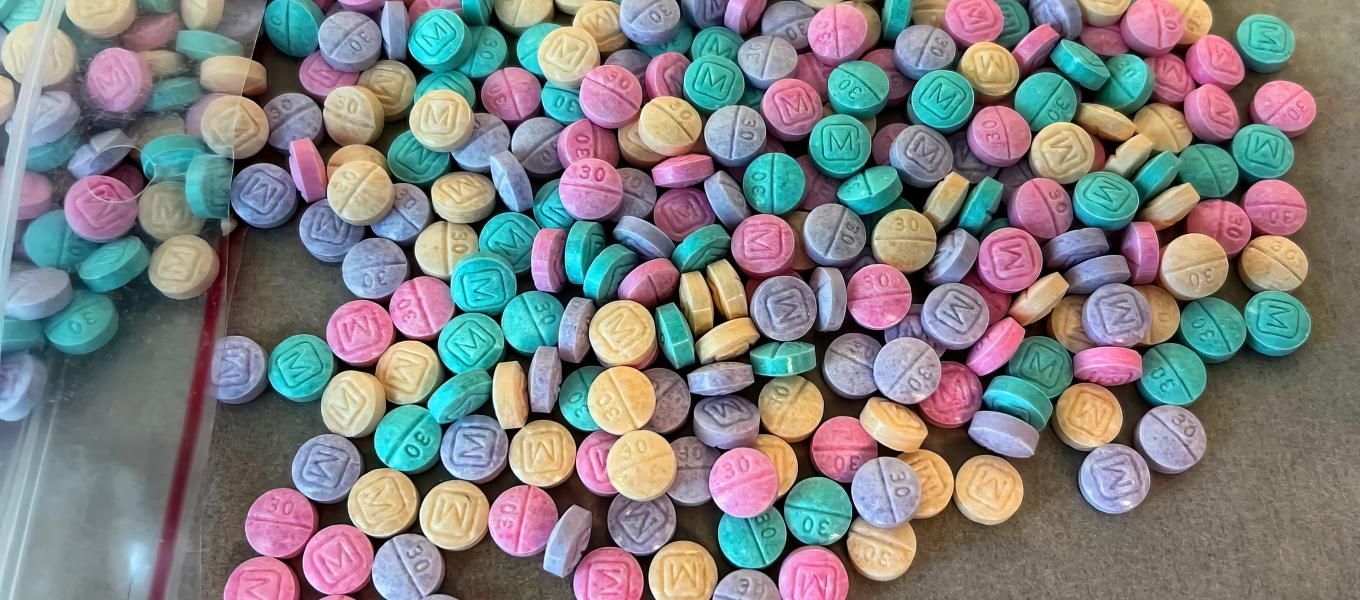
Pile of colorful pills, mostly turquoise, pink, purple, and yellow, spilled from a clear plastic bag.

The term “opioid” covers a broad group of pain-relieving drugs, including natural (morphine) and synthetic (fentanyl) opiates. They come in capsules, tablets, powder, transdermal patches, and liquids.

Opioids can be used safely to treat severe pain if they are taken as prescribed by a doctor. However, if they are misused or for too long, they can lead to abuse, addiction, and even death.

Pain medications generate sensations of pleasure because they powerfully activate the limbic system’s reward regions, which are responsible for mood, attention, and emotional reactions. However, continuous opioid usage causes the body to build a tolerance to these drugs, requiring higher doses to provide the same effect and leading to addiction.

An opioid overdose can result in death by slowing respiration and heart rate.

According to the Centers for Disease Control and Prevention (CDC), more than 107,000 people died in the United States from opioid overdoses between January 2021 and January 2022, a 15% rise over the previous year. [i]

What is Fentanyl?

Fentanyl is an extremely powerful synthetic opioid used to treat severe pain. It is frequently prescribed to individuals with chronic pain who have become resistant to other opioids or to treat severe pain following surgery.

Fentanyl is a prescribed medicine, but it may also be synthesized and used illegally when it is typically mixed with other drugs such as heroin, methamphetamine, and cocaine.

Fentanyl is 50 times more potent than heroin and 100 times stronger than morphine. Because of its potency, fentanyl is highly addictive, and it is the most common substance found in opioid overdose deaths in Arizona.

Fentanyl overdoses have surged dramatically in Arizona in recent years. Fentanyl is the most common substance found in all opioid overdose deaths in Arizona. The fact that minors under 17 (some as young as 14) have died due to a fentanyl overdose is alarming. [ii]

What Caused the Fentanyl Crisis in Arizona?


Stephanie Siete, a recognized specialist on developing drug trends, estimates that more than 20 million pills were distributed in Arizona in 2022.[iii]

In 2021, the Arizona DEA seized 12 million fentanyl tablets. [iv]

The Sinaloa Cartels in Mexico produce most of the pills, which are brought up through Arizona and distributed across the rest of the country. Arizona’s border counties accounted for more than 36 percent of statewide fentanyl seizures in 2022.

In 2021, there were 2,006 fatal opioid overdoses in Arizona, according to the Common ,Sense Institute Arizona. [v]

In Arizona, the number of overdose deaths rose by 41% in 2022. From April 2021 to April 2022, 2,723 people died of an overdose. [vi]

Addiction to Fentanyl in Adolescents


According to the DEA, overdose fatalities among Arizona youths aged 14 to 18 climbed by 94% between 2019 and 2020 and 20% between 2020 and 2021. [vii]

According to Siete, fentanyl pills are very deceptive as they come in all shapes and colors. Because they are often candy-like and appear innocent, teenagers might believe something such as a rainbow-colored pill cannot harm them.

Additionally, fentanyl can be mixed with any other drug. Many individuals died from overdoses because they were unaware that fentanyl had been added to meth, cocaine, and other drugs. According to research, 70 percent of the heroin in the U.S. is mixed with fentanyl; one dose could be fatal. [viii]

However, DEA research shows that six out of ten fentanyl pills contain a fatal dose. [ix]

COVID-19 and the Opioid Epidemic


The pandemic has increased drug abuse across the country. Children, as well as adults, struggle to find ways to cope with stress, anxiety, and depression. Unfortunately, many use substances to numb the distressing feelings and manage the pressure.

Teenagers who abuse opioids most frequently get them from friends or family members. They often use them against the instructions, either by taking more than the recommended dose, using someone else’s prescription, or mixing them with alcohol or other drugs.


Raising Awareness


Parents and teachers need to get educated on the dangers associated with opiate use.

A teen’s brain is still developing. The prefrontal cortex, the brain region that controls impulses, problem-solving, judgment, and decision-making, fully matures in the early twenties. So, in decision-making, children and teens rely on their amygdala, the brain region in charge of emotions and motivation.

The opioids activate the limbic system’s reward areas. Still, teenagers cannot fully perceive the danger associated with drug misuse as their decision-making and impulse control brain regions are still not fully developed.

They are unaware of the risk of taking opioids until we educate them.

Also, support necessary for sober living such as Community Impact Program Resources can help people recovering from SUD and addiction stay clean and manage challenges of everyday life.


 Reference articles

[i] https://www.cdc.gov/nchs/pressroom/nchs_press_releases/2022/202205.htm

[ii] https://www.cdc.gov/nchs/pressroom/states/arizona/az.htm

[iii] https://azpbs.org/horizon/2022/11/fentanyl-cases-skyrocketing-in-arizona/#:~:text=2%2C%202022&text=Fentanyl%20cases%20are%20skyrocketing%20in%20Arizona.,old%20have%20overdosed%20and%20died.

[iv] https://www.12news.com/article/news/local/arizona/over-half-of-the-nations-fentanyl-pills-are-seized-in-arizona/75-9574d508-6cb2-47e7-b4a4-171f2a74007b

[v] https://commonsenseinstituteaz.org/fentanyl-crime-and-arizonas-southern-border-august-2022/#:~:text=Seizures%20of%20fentanyl%20by%20DPS,2022%20have%20occurred%20in%20them.

[vi] https://www.abc15.com/news/state/data-fentanyl-overdose-deaths-in-arizona#:~:text=During%202022%20overdose%20deaths%20rose,April%202021%20to%20April%202022.

[vii] https://www.cdc.gov/mmwr/volumes/71/wr/mm7150a2.htm

[viii] https://newhampshirebulletin.com/briefs/state-officials-warn-of-increase-in-non-opioid-drugs-laced-with-fentanyl/#:~:text=%E2%80%9CWhen%20we%20do%20see%20heroin,is%20mixed%20with%20other%20drugs.%20%E2%80%A6

[ix] https://www.dea.gov/alert/dea-laboratory-testing-reveals-6-out-10-fentanyl-laced-fake-prescription-pills-now-contain


Man in denim jacket with beard, in a support group. Another man clapping in the background.

RECENT ARTICLES

By Marjorie McMillian November 1, 2025
Rising Stronger: How Navigating Life’s Challenges Can Spark Personal Growth Life doesn’t always move in straight lines. For many, the hardest chapters, the ones marked by setbacks, uncertainty, or recovery, become the turning points that lead to transformation. Growth doesn’t happen in the absence of struggle; it happens through it. If you’re rebuilding, healing, or starting over, remember this: adversity isn’t just something to survive. It's something that can shape you into a wiser, more grounded, more purpose-driven version of yourself. 🌅 Highlights ● Adversity isn’t failure; it’s feedback for growth. ● Small steps toward structure, reflection, and connection build resilience. ● Your story can become your strength — not your shadow. ● New learning, purpose, and service can help turn recovery into renewal. Step 1: Reframe Adversity as an Opportunity When facing hard times, it’s easy to ask “Why me?” But reframing the question to “What can this teach me?” shifts everything. Adversity forces reflection. It helps you identify what truly matters and what no longer serves you. Whether it’s relationships, habits, or old self-beliefs, tough experiences often clear the space for something better to take root. Tip: Start journaling your reflections . Track what challenges you’ve faced, how you handled them, and what strengths helped you through. Over time, patterns of growth become clear and empowering. Step 2: Build Resilience Through Routine Healing and growth thrive in consistency. Establishing routines, even simple ones, brings calm and structure to days that might otherwise feel unpredictable. Try: ● A morning walk or stretch to start your day with movement. ● Setting one intention each day, no matter how small. ● Evening reflection or gratitude journaling to ground your thoughts. Small acts of self-discipline compound into confidence. Step 3: Connect With People Who Understand the Journey Support isn’t a luxury, it’s essential. Surround yourself with people who understand recovery and personal growth, whether that’s a peer group, mentor, counselor, or online community. Sharing your progress, fears, and victories creates accountability and connection. You don’t have to do this alone, and in fact, you’ll go further when you don’t. Step 4: Find Purpose Through Learning and Growth Sometimes, life’s hardest seasons point toward new paths, and education can be one of them. Many people find that pursuing new knowledge gives them a renewed sense of focus, confidence, and purpose. Nursing and other service-based careers often resonate deeply with people who’ve overcome adversity. If you’re thinking about starting fresh or building on earlier education, earn your MSN or explore other online degree options that align with your goals. Online programs make it possible to earn your degree while still working full-time or caring for family, allowing you to balance personal recovery with forward momentum. Some other great options could be counseling, psychology, coaching, or teaching. Such careers bring: ● Compassion ● Resilience ● Helping others grow Your journey can become a source of strength for others and a foundation for a career that gives back. Step 5: Embrace Growth as a Lifelong Practice Personal growth isn’t a destination as much as it’s an ongoing process. Even after recovery, there will be ups and downs, successes and setbacks. What matters most is your willingness to keep learning, adapting, and showing up. Ways to continue your growth journey: ● Read one inspiring book each month about resilience or mindset. ● Keep a gratitude list for perspective. ● Celebrate progress instead of perfection . ● Practice forgiveness both of others and yourself. Growth happens slowly, and then, suddenly, it shows. 🌿 Common Challenges and Growth Opportunities in Recovery Challenge Emotional Impact Growth Opportunity Helpful Action Feelings of guilt or regret Low self-worth, discouragement Develop self-compassion and forgiveness Write letters of release or affirmations Loss of old routines or friends Loneliness, identity confusion Build healthy new habits and connections Join support groups or classes Fear of failure Hesitation to move forward Learn resilience through small wins Set weekly goals and track progress Uncertainty about the future Anxiety or doubt Redefine purpose and direction Volunteer or take a new course Relapse or setbacks Shame, frustration Practice self-awareness and recommitment Talk to a sponsor, mentor, or therapist Each challenge can be a teacher — revealing what still needs healing and what’s ready to grow. ✅ Personal Growth Checklist Use this list as a guide to keep yourself on track: ● I’ve identified what challenges have shaped my growth. ● I’m maintaining a daily or weekly routine that grounds me. ● I seek connection with supportive people or groups. ● I treat myself with compassion instead of criticism. ● I’m setting achievable goals and celebrating progress. ● I’m learning new skills or exploring new paths for my future. ● I focus on the present moment instead of past regrets. ● I remind myself regularly of how far I’ve come. 🧭 Tip: Keep this checklist somewhere visible — growth is easier to see when you measure it with kindness. 🌱 Glossary Resilience: The ability to recover and adapt after difficult experiences. Self-Compassion: Treating yourself with understanding rather than harsh self-criticism. Mindset: The set of beliefs that shape how you interpret and respond to challenges. Purpose: A sense of direction or meaning that guides your actions and choices. ✨ Wrap Up Adversity can break you open, but it can also build you. Every challenge you’ve faced has given you insight, empathy, and inner strength that can guide your next chapter. When you turn your struggles into lessons, and your lessons into action, you not only grow, you transform. Recovery isn’t just about getting back to who you were; it’s about becoming someone wiser, steadier, and more capable than before. Every setback can be a seed, and you’re the soil where growth begins again.
Man in denim jacket with beard, in a support group. Another man clapping in the background.
By Marjorie Mc Millian November 4, 2024
Beyond the Surface: Unraveling the Impact of Parental Anxiety on Children 
Person counting money with a calculator and notepad on a wooden desk.
By Marjorie McMillian October 26, 2024
Rebuilding Your Entrepreneurial Finances Following Addiction Recovery